Your D2C Jewellery Brand Needs a 3D Visualizer, ASAP.
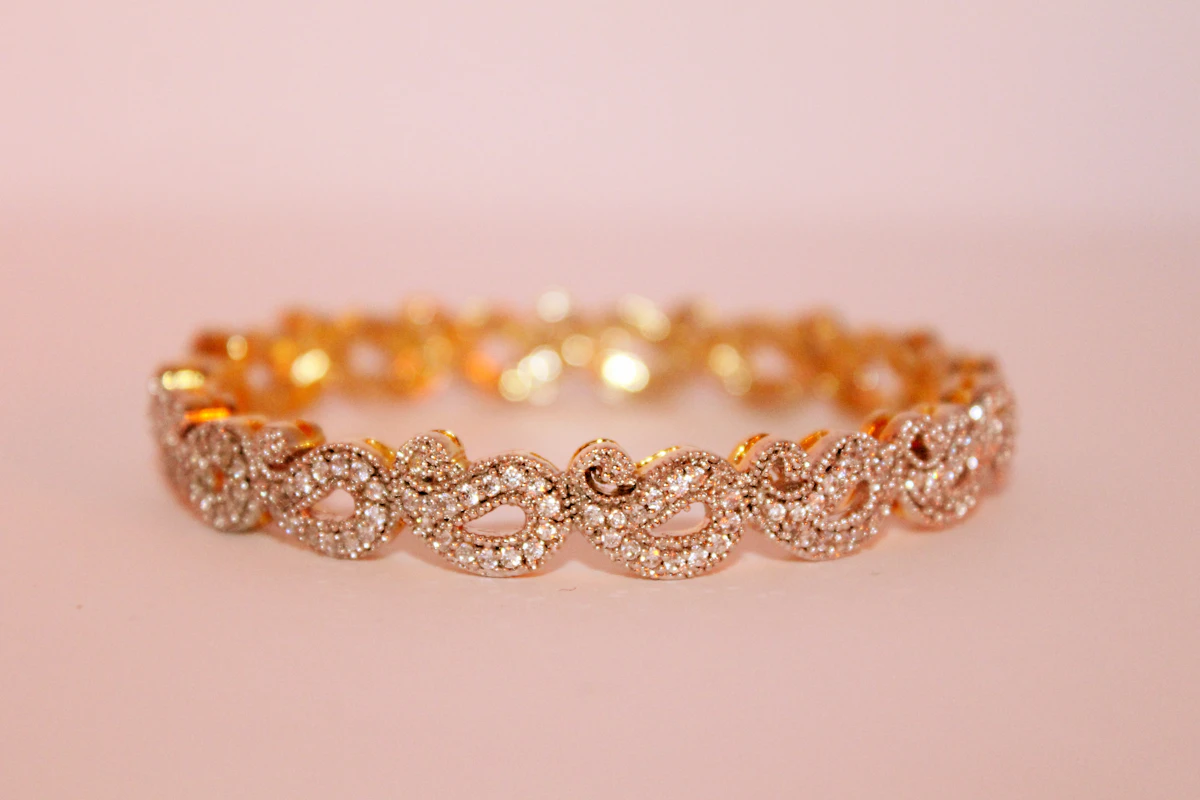
Your 2D JPEGs Are Killing Your Jewellery Sales – Seriously.
Most Indian D2C jewellery brands are leaving serious cash on the table, trying to sell intricate pieces with flat, lifeless 2D images. It's a truth bomb, but there's no way around it: your customers can't *feel* the weight, *see* the sparkle, or *understand* the craftsmanship from a couple of photos. The trust just isn't there, and that's why conversion rates tank and returns pile up faster than unsold stock during Diwali.
We build products at RAGSPRO. Real products. And what we’ve seen across categories, especially high-ticket items like jewellery, is that the visual experience isn't just a 'nice to have.' It’s the foundational bedrock of online trust. You wouldn't buy a ₹50,000 diamond ring without seeing it up close, right? So why expect your customers to do the same on your website? The average online return rate for general e-commerce hovers around 20-30%, but for items like jewellery where perception is everything, the potential for disappointment is massive. This isn't just about pretty pictures; it's about solving a fundamental e-commerce problem.
Forget the generic 'high-quality product photography' advice. That’s table stakes. We're talking about giving your customer the closest thing to holding that piece in their hand, rotating it, zooming in on every facet, even trying it on virtually. Brands like Grazia Stones, if they're smart, are already exploring this — moving beyond the 'chalta hai' approach to online selling and embracing immersive 3D commerce.
The 'Chalta Hai' Mindset Sinks Jewellery Brands Faster Than a Leaky Boat.
Most Indian founders, especially in D2C jewellery, get stuck. They launch with decent product shots, maybe a quick video, and then think 'bas ho gaya.' This 'chalta hai' attitude is precisely why they struggle to scale beyond a certain point. Your potential customer, sitting in Bengaluru or Bhopal, needs to be as convinced by your digital presentation as someone walking into a physical Tanishq store in Bandra.
Think about it. When you walk into a jewellery store, you touch the piece, you hold it up to the light, you might even try it on. The salesperson highlights the cut, the clarity, the way the light plays off the metal. That's a multi-sensory experience. Online, you strip away almost all of that. You're left with pixels. If those pixels don't convey absolute confidence, you've lost the sale. It's not about being fancy; it's about replicating trust, digitally.
The competition isn’t just local anymore. It’s global. Customers expect more. They've seen brands like Lenskart innovate with virtual try-ons for glasses. They know what's possible. Sticking to static images for a high-value, emotionally charged purchase like jewellery is like trying to win a Formula 1 race with a bicycle. You're just not equipped for the modern digital consumer’s demands, and you’re certainly not giving them 'paisa vasool' for their screen time if they can't even properly inspect what they're buying.
Grazia Stones-Level Visualizers: Building Digital Trust, One Spin at a Time.
Imagine Grazia Stones (or any forward-thinking jewellery brand) nails this. What does that actually look like? It means when a customer lands on a product page, they don't just see five different angles. They see a full 360-degree, interactive 3D model. They can drag their mouse to spin it, pinch to zoom in on the smallest engraving, change the metal finish from yellow gold to rose gold instantly, or even swap out the stone. That’s building trust.
This isn't some futuristic sci-fi stuff; this is here, now. We’ve shipped 13+ live products at RAGSPRO, and the delta in user engagement and conversion when you add this level of interaction is night and day. It’s the difference between browsing a catalogue and feeling like you're in a high-end boutique. For a jewellery brand, where every facet and curve matters, this is a non-negotiable differentiator.
A top-tier 3D visualizer lets your customer explore. They can see how light refracts off a specific diamond cut, how a gemstone's color shifts under different rotations, or the intricate details of a Kundan piece. This level of transparency removes purchase friction. It answers questions they didn't even know they had, all before they hit the 'Add to Cart' button. It's not just a fancy feature; it’s a robust sales tool that acts as your most convincing digital salesperson, available 24/7 without needing a coffee break.
Beyond 2D JPEGs: The Tech Under The Hood Isn't Rocket Science.
So, how do you actually pull this off? It's not magic, it's engineering. We're talking about WebGL and libraries like Three.js for rendering, working with optimized 3D models typically in glTF or GLB format. These are industry standards. We don't just throw a 3D model up; we ensure it's performant, loads fast, and looks stunning on any device—mobile first, bilkul.
Here's a simple example. For a web-based 3D visualizer, we’d set up a Next.js frontend. The core rendering logic would live in a component that leverages Three.js. You'd load your `model.glb` file, set up a camera, lighting, and controls. Something like this:
import { useRef, useEffect } from 'react';
import * as THREE from 'three';
import { GLTFLoader } from 'three/addons/loaders/GLTFLoader.js';
import { OrbitControls } from 'three/addons/controls/OrbitControls.js';

const ProductVisualizer = ({ modelPath }) => {
  const mountRef = useRef(null);

  useEffect(() => {
    const currentMount = mountRef.current;
    if (!currentMount) return;

    // Scene setup (simplified for brevity)
    const scene = new THREE.Scene();
    const camera = new THREE.PerspectiveCamera(75, currentMount.clientWidth / currentMount.clientHeight, 0.1, 1000);
    const renderer = new THREE.WebGLRenderer({ antialias: true, alpha: true });
    renderer.setSize(currentMount.clientWidth, currentMount.clientHeight);
    currentMount.appendChild(renderer.domElement);

    // Lighting
    const ambientLight = new THREE.AmbientLight(0xffffff, 0.8);
    scene.add(ambientLight);
    const directionalLight = new THREE.DirectionalLight(0xffffff, 1);
    directionalLight.position.set(1, 1, 1).normalize();
    scene.add(directionalLight);

    // Model loading
    const loader = new GLTFLoader();
    loader.load(modelPath, (gltf) => {
      scene.add(gltf.scene);
    });

    // Controls
    const controls = new OrbitControls(camera, renderer.domElement);
    camera.position.z = 2;

    // Animation loop
    const animate = () => {
      requestAnimationFrame(animate);
      controls.update();
      renderer.render(scene, camera);
    };
    animate();

    return () => {
      currentMount.removeChild(renderer.domElement);
      renderer.dispose();
      controls.dispose();
    };
  }, [modelPath]);

  return ;
};

export default ProductVisualizer;
This isn't a full production-ready snippet, but it shows the core idea. You load a 3D model, set up a virtual environment (scene, camera, lights), and then allow user interaction via controls. The real challenge is optimizing model poly counts, texturing, and ensuring consistent lighting across all your products for a seamless brand experience. But the underlying tech is robust and well-documented. You just need someone who knows how to wield it, not just Google it.
The backend? Supabase for authentication and database, storing metadata about the 3D models, maybe even user preferences. Prisma for ORM. Deployed on Vercel for lightning-fast edge delivery. This stack lets you ship fast, iterate faster, and handle growth without breaking the bank or your dev team. It’s not about using the most complex tech; it’s about using the *right* tech for the job to deliver a delightful user experience. That's the RAGSPRO way: pragmatic, performant, profitable.
AR Shopping: The Virtual Try-On Revolution You Can't Ignore.
Now, let's talk about taking that 3D model a step further: Augmented Reality (AR). This isn't just seeing the product in 3D; this is seeing it *on yourself*. Imagine trying on a pair of earrings or a necklace using your phone's camera, right there in your living room. No filters, no guesswork – just real-time visualization of how the jewellery looks on you. This is the holy grail for D2C jewellery.
For web-based AR, we can leverage WebXR APIs combined with libraries like AR.js. For a mobile app experience (think Expo for cross-platform), you'd integrate native AR capabilities (ARKit on iOS, ARCore on Android). The beauty here is that the same 3D models you use for your visualizer can be repurposed for AR. It’s about leveraging your assets across different immersive experiences.
A client of ours, a small fashion accessory brand we built an MVP for, saw a 15% increase in conversion rates for products with AR try-on enabled. This wasn't jewellery, but the principle is identical. The psychological barrier to purchase—"Will this suit me?"—gets obliterated. It’s the closest thing to a fitting room without leaving your couch. For jewellery, where aesthetics are paramount, AR isn't just a gimmick; it's a sales superpower. It moves beyond passive viewing to active participation.
Real Impact: Reduced Returns, Higher Conversions, More Trust.
The numbers don't lie. Online retail, especially for fashion and accessories, battles a significant return problem. As mentioned, average return rates hit 20-30%. For jewellery, while maybe not as high as apparel, returns still mean lost shipping costs, repackaging, quality checks, and ultimately, damaged brand perception. A 3D visualizer, especially with AR capabilities, directly addresses the primary reasons for returns: product misrepresentation or dissatisfaction with how it looks in real life.
A study by Shopify found that products with 3D content see a 250% higher conversion rate than products with 2D images. Let that sink in. Two hundred and fifty percent! This isn’t a small bump; this is a seismic shift in how effective your product pages are. For a D2C jewellery brand, this means every visitor is significantly more likely to become a customer.
We recently worked with a budding D2C brand, let's call them 'Radiant Gems,' that sold bespoke silver jewellery. Their online store was struggling with an 18% return rate, mostly due to customers feeling the "actual product didn't match the image." For ₹79,999, we built them a Next.js store with an integrated 3D visualizer for their top 20 SKUs, delivered in 25 days. Post-launch, within two months, their return rate for those SKUs dropped to under 7%, and their conversion rate saw a net 12% boost across the entire site as user trust in their online experience increased. That’s the power of solving a real problem with the right tech. That's real, tangible ROI.
Cost vs. ROI: Why It's Paisa Vasool, Not Kharcha.
Many founders immediately think, "Oh, 3D and AR? That's super expensive, a luxury." And honestly, sometimes they're right if they go to the wrong agency that charges ₹5L for a simple integration. But that's where the RAGSPRO model shines. We ship revenue-ready MVPs in 20 days. Our 3D visualizer MVPs, depending on complexity, typically start around ₹49,999. For a full-blown interactive SaaS with AR try-on for a range of products, it might go up to ₹1.99L.
Compare that to the costs of *not* having it: lost sales, high return logistics costs, customer acquisition costs that aren't converting, and a brand image that screams 'basic.' What's the value of a single customer who *doesn't* return a ₹10,000 necklace? What's the value of converting just 5% more of your traffic? The ROI isn't just positive; it's exponential. It’s pure 'paisa vasool'.
Think about the marketing budget you spend driving traffic. If that traffic hits a dead-end with poor visuals, you're essentially burning money. Investing in a 3D visualizer is not a marketing expense; it's a foundational sales infrastructure investment. It makes every rupee you spend on ads work harder. This isn't just about selling; it's about selling *more efficiently* and building a sticky customer base that trusts your online presence implicitly. This isn't a 'kharcha,' it's strategic asset building for your D2C brand's future.
Implementation Headaches? Not With The Right Approach.
So, you're convinced. You need this. But how do you actually get it done without getting tangled in endless developer cycles? You've got options: build in-house, buy an off-the-shelf solution, or work with a specialized agency.
Building in-house for a small D2C brand is usually a bad idea. It’s expensive, slow, and demands specialized 3D developers you probably don't have. Off-the-shelf Shopify apps exist, but they often come with limitations—generic models, limited customization, and they can slow down your site. They're good for a quick test, but rarely scale or offer the bespoke experience you need to stand out.
The sweet spot for most growing D2C brands? Partnering with an agency that understands rapid iteration and practical, revenue-focused development. We build these systems from the ground up, tailored to your brand, using modern tech stacks. We integrate directly with your existing e-commerce platform—Shopify, WooCommerce, custom Next.js builds—whatever you're running. The goal is seamless integration, not a clunky add-on. We handle the 3D model optimization, the WebGL magic, and the AR integration, so you can focus on your designs and marketing.
The RAGSPRO Way: Shipping a Revenue-Ready MVP in 20 Days.
At RAGSPRO, we operate differently. We don't do endless meetings and vague promises. We ship. Our model is built around delivering a Minimum Viable Product (MVP) that's *revenue-ready* in 20 days. For a D2C jewellery brand wanting a 3D visualizer, this means we focus on your core collection, perhaps the top 5-10 SKUs that drive most of your sales.
Our process: Day 1-5: Requirements gathering and 3D model acquisition/optimization (we can help with getting your CAD files converted). Day 6-15: Core development — setting up the Next.js frontend, integrating Three.js for interactive 3D, hooking it up to a simple CMS or your existing product database. Day 16-20: Testing, optimizations, and deployment to Vercel. We use Supabase for any custom backend logic or data needs, ensuring scalability from day one.
This isn't just a prototype; it's a fully functional, live system designed to start generating ROI immediately. We focus on the features that matter most for conversion—360-degree spin, zoom, material/color changes—and then iterate based on real user feedback. Our client, ‘Luxe Charms,’ approached us with a challenge: their premium line wasn’t moving online. In 20 days, we built them a dedicated product page experience for their high-value rings, integrating a custom 3D visualizer that allowed buyers to customize stone cuts and metal types. Within a month, that product line saw a 3x increase in engagement and a remarkable 45% uplift in sales. That's a 20-day investment for game-changing results. No fuss, just shipping.
The Future is Tangible: Don't Get Left Behind.
The D2C jewellery space in India is exploding. From small artisans selling on Instagram to well-funded startups vying for market share, everyone's looking for an edge. India's e-commerce market is projected to reach $300 billion by 2030, and immersive experiences like 3D and AR are going to define who wins that race.
What's next? Think AI-driven recommendations based on virtual try-ons, haptic feedback to simulate texture, or even integrating your products into metaverse experiences. This isn't just about selling a product; it's about building an entire digital universe around your brand. Those who embrace these technologies now will be the Zerodhas and CREDs of the D2C jewellery world, leaving the competition playing catch-up with their blurry JPEGs.
Don't be that brand. Don't waste another six months contemplating. The tech is ready, the market is hungry for immersive experiences, and the tools are accessible. Your competition isn't sleeping, and neither should your D2C jewellery brand. The choice is clear: build digital trust with cutting-edge visuals, or get out-competed by those who do. It's time to ship.
Ready to bring your D2C jewellery brand into the future? At RAGSPRO, we ship revenue-ready MVPs in 20 days, from ₹49,999. Let’s build something real that makes money. Reach out to me, Raghav Shah, and let’s talk about getting your 3D visualizer live.
" }Want to Build Something Like This?
Get your MVP built in 20 days — starting at ₹49,999
Book Free Discovery Call →